

"Product Manager" as a title is undergoing a fundamental redefinition—something akin to the transition from the hand-spinning wheel to the steam engine.
Here's my conclusion, and it may be uncomfortable to hear:
PMs whose primary skills are coordination and communication—are approaching their twilight.
But Product Creators—those who understand value and can build with their own hands—are entering the greatest golden age of their careers.
This isn't just about getting better tools. The underlying logic of the work itself has changed.
To explain this properly, we need to go deeper. From economic long waves to the philosophy of labor, and finally to how a working prototype can emerge in four hours.
Part 1: The Twilight of the Middleman
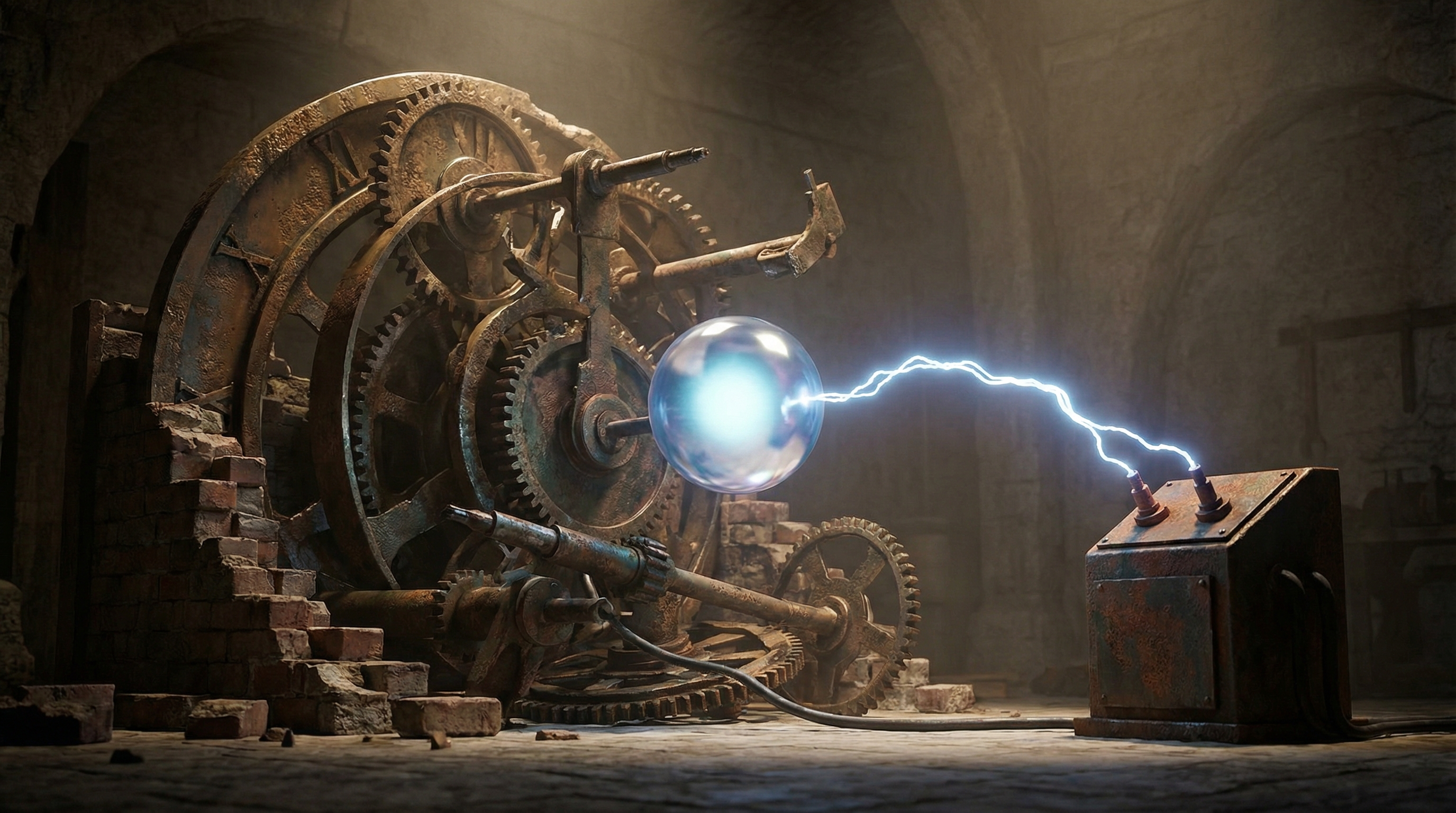
We're currently at the tail end of the Fifth Kondratieff Wave (the Information Technology era), entering a period of violent transition into the Sixth Wave (Artificial Intelligence and Biotechnology).
During the golden two decades of the internet (the Fifth Wave), the core tensions in software engineering were extreme information asymmetry and extreme collaboration complexity.
To solve these tensions, we invented the role of "Product Manager."
What did traditional PMs actually do?
- Translate: Convert the vague requirements from business stakeholders into documents that developers could understand (PRDs).
- Coordinate: Act as lubricant between design, development, and testing to reduce communication friction.
- Manage: Watch the progress bars in Jira to ensure on-time delivery.
Notice that the core value of all three activities is reducing transaction costs. In other words, the traditional PM was essentially a sophisticated information router.
But AI—especially Large Language Models—has driven the marginal cost of "translation" and "coordination" toward zero.
- AI doesn't need PRDs. It understands natural language and can even help you complete your logic.
- AI doesn't need coordination. The combination of Cursor + v0.dev + Replit turns "design-develop-deploy" into a streaming process with no handoff gaps.
When the middleman can no longer earn the spread, the old definition of the role collapses.
If your value still resides in "communication," "coordination," and "writing documents," you're not just lacking a future—you're on the eve of technological unemployment.
Part 2: The Return of Ownership

In his 1844 manuscripts, Marx introduced the concept of "alienated labor": the worker becomes separated from the product of their work. Labor becomes merely a means of survival. The human becomes an appendage of the machine.
Think about the current state of product management. Isn't it a form of extreme alienation?
You write 100 pages of documentation, but the code isn't yours, the design isn't yours, and when the product ships with bugs, you still take the blame. You're far removed from the actual creation. You're just another cog in the assembly line—turning a screw called "requirements."
This is why so many PMs feel anxious, exhausted, and devoid of accomplishment.
But AI has brought a stunning reversal: de-alienation.
Lenny Rachitsky, a prominent product thinker, has articulated the concept of the Full Stack Builder.
Today's AI toolchain—what I call the "AI Trinity" of v0.dev + Cursor + Replit—enables a PM with zero coding background to reclaim the means of digital production.
Previously, your power and sense of accomplishment came from "managing people's schedules." Now, it comes from "defining the properties of things." You no longer need to beg for engineering resources, because AI is your most loyal, zero-marginal-cost executor. This feeling of "idea becomes product" is something the alienated traditional PM role could never provide.
Part 3: GIGO—The Brutal Auditor
At this point, you might be thinking: "Great, so AI makes the PM's job easier?"
Exactly wrong.
AI doesn't bring ease. It brings brutal accountability.
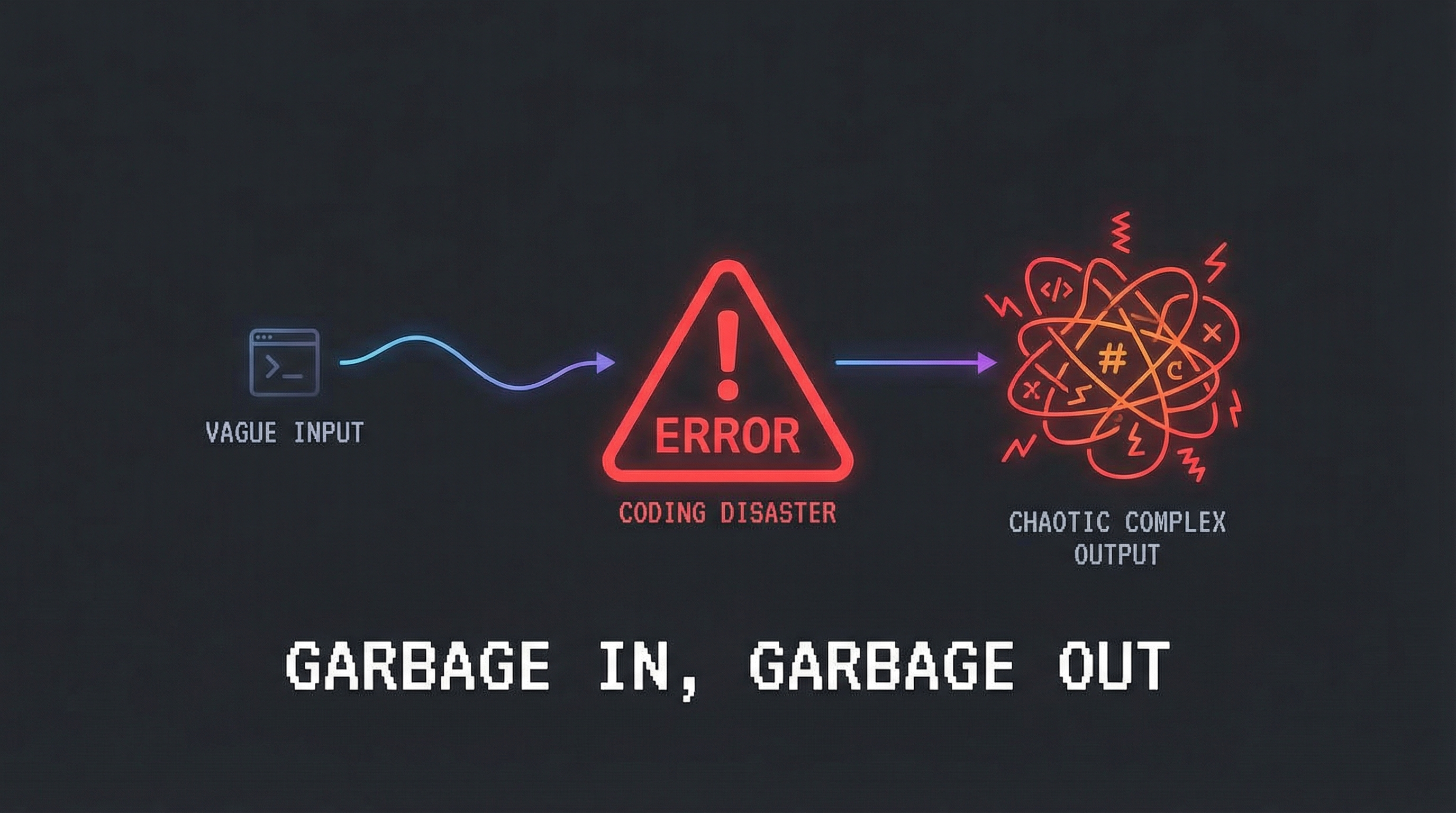
There's an iron law in computer science: GIGO (Garbage In, Garbage Out).
AI is a hyper-literal executor that does exactly what you tell it.
- In the traditional model, if your requirements were sloppy, a senior developer would push back and help you fill in the logical gaps. Your incompetence was masked by the developer's experience.
- In the AI model, if your requirements are sloppy (logically incomplete, definitions unclear), AI will generate at lightning speed a mountain of code that looks like it runs but is logically garbage.
METR's 2025 research revealed a sobering statistic: for developers with weak requirement-definition skills, using AI assistance actually decreased development efficiency by 19%.
Why? Because you spend ten times the effort fixing the bugs AI wrote for you.
This creates an extremely brutal phenomenon: AI is auditing your core competencies in real time.
- Is your business logic internally consistent?
- Is your taste (aesthetic judgment) online? When AI gives you 10 options, can you pick the one that will resonate?
- Do you actually understand this product?
The real anxiety isn't being replaced by AI. It's being publicly exposed by AI.
AI is like a magic mirror that instantly strips away all the "communication overhead" and "resource excuses." If you can't build a good product, now you can only blame your own inadequacy.
This is precisely why tools for structured requirements—like SRS Writer, a VS Code extension that uses 17 specialized AI agents to transform vague ideas into traceable specifications—are becoming essential. Product Creators who want AI to amplify their vision need to ensure they're feeding it signal, not noise.
Part 4: The Final Reckoning
So, back to the original question: Do Product Managers have a future?
Here's my projection:
1. The Death of the Middleman PM
Within three years, large numbers of PMs who only know how to draw wireframes, write documents, and relay messages will be optimized away. Organizational structures will become extremely flat. "1 Super PM + AI" will replace the traditional squad of "1 PM + 5 developers."
2. The Rise of the Full Stack Builder
Those who remain won't be called "Product Managers." They might be called "Product Principals," "Indie Developers," or "Product CEOs."
KPMG data shows that PMs with AI skills are already commanding a 30% salary premium. This is just the beginning.
General-purpose multi-agent platforms like HephOS embody this future—where creators don't write code or detailed specs, but assemble and direct specialized AI agent teams. Each AI agent "employee" has distinct skills and personalities. The PM becomes an orchestrator of an AI workforce.
Three Pieces of Final Advice
1. Stop Managing. Start Building.
Stop romanticizing "management." Learn prompt engineering. Understand software engineering. Build a few demos with your own hands. Only when you've touched the boundaries of creation yourself will you know how to command your AI army.
2. Cultivate Taste and Judgment.
AI has solved execution. But this has infinitely amplified the premium on creativity and decision-making. Picking the option that will move hearts out of 100 AI-generated alternatives—that requires deep humanistic cultivation and commercial intuition.
3. Embrace Systems Thinking.
You're no longer just defining a feature. You're defining a system. You will be the "creator" of that system, and AI will be the magic wand in your hand that turns stones into gold.
One thought leads to heaven. Another leads to hell.
The future belongs to those who dare to harness AI, dare to own outcomes, and possess CEO-level decision-making and building capabilities.
The wave hasn't fully crashed yet. Get in the water while you can.
The author is a co-founder at Testany, building AI-native tools for the next generation of creators. The views expressed here are his own.